
Last Updated on October 6, 2026 by lewisedwards
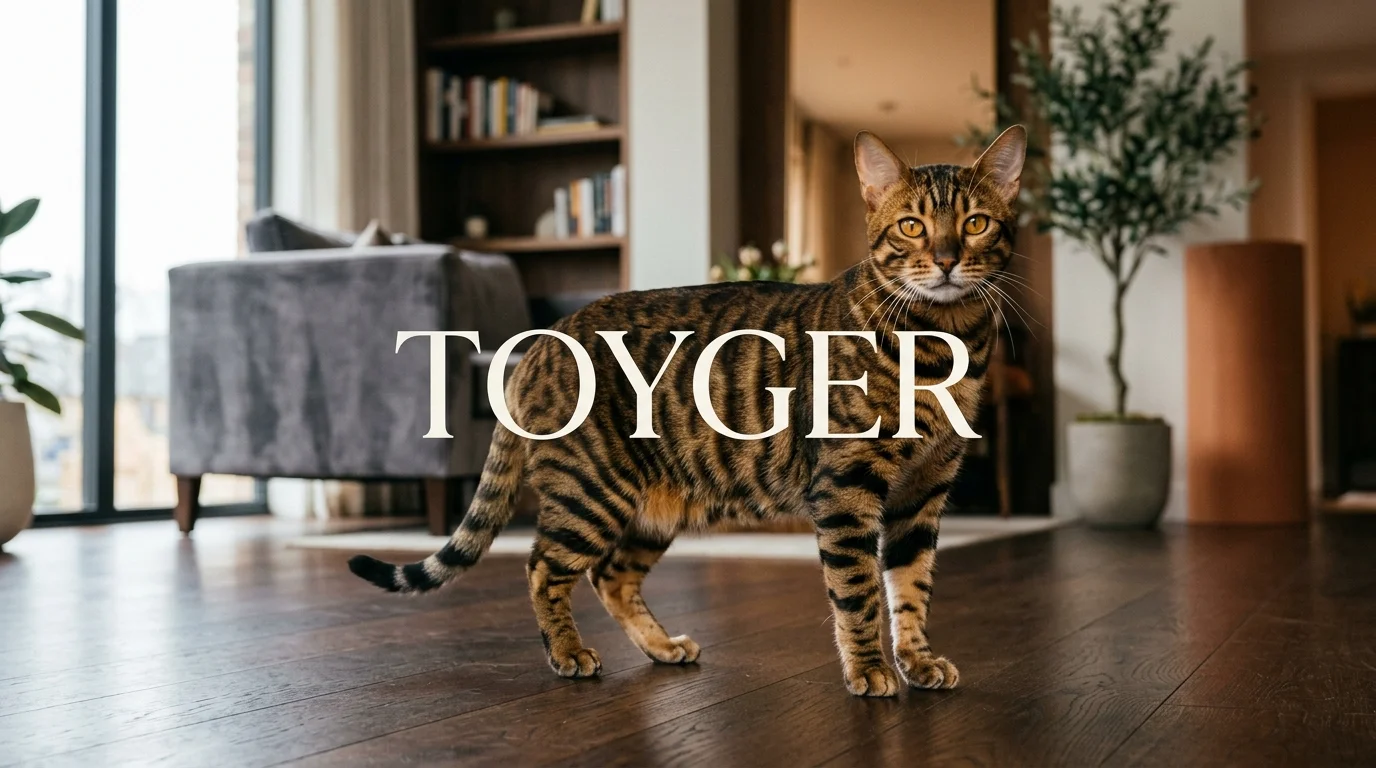
With its orange-brown coat and dark vertical stripes, the Toyger can look like a miniature tiger at first glance. That appearance comes from selective domestic breeding, not tiger ancestry. For U.S. owners, the bigger questions are temperament, care needs, health, cost, and breeder quality.
The Toyger is a medium-sized domestic cat bred for bold, tiger-like stripes and a social temperament. It has no tiger blood and remains fully domestic. Owners should expect daily play, simple coat care, and routine veterinary attention. U.S. buyers should also screen breeders carefully because the breed remains uncommon.
| Key fact | What U.S. owners should know |
|---|---|
| Origin | Developed in the United States beginning in the late 1980s. |
| Size | About 7–15 pounds and 9–13 inches at the shoulder. |
| Temperament | Social, affectionate, playful, intelligent, and generally trainable. |
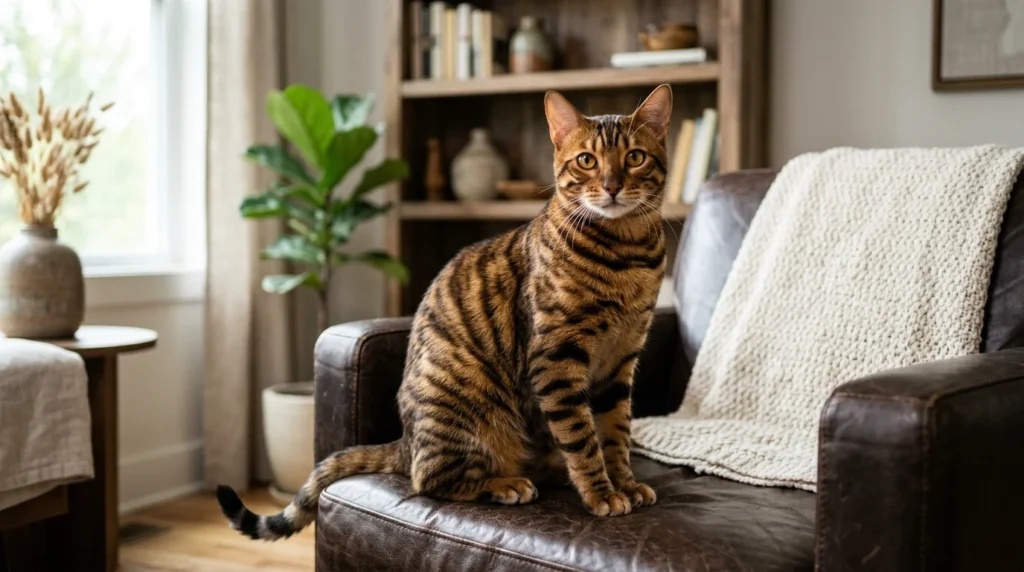
| Coat | Short, plush, brown mackerel tabby with bold vertical striping. |
| Exercise | Interactive play matters; plan on at least 30 minutes daily. |
| Lifespan | Major sources place lifespan from about nine years into the mid-teens. |
| Price | Commonly about $1,200–$3,000 from registered U.S. breeders. |
| Allergies | No cat breed is truly hypoallergenic. |
Key Takeaways
- This is a fully domestic breed with a deliberately tiger-like appearance.
- Most individuals need daily interaction, play, climbing space, and mental stimulation.
- The short coat is easy to maintain, but veterinary care and breeder screening still matter.
- Prices vary widely, so pedigree papers and health records matter more than dramatic markings.
- Families with cat allergies should not assume a short coat means lower allergen exposure.
What Is a Toyger Cat and Where Did the Breed Come From?
Breeder Judy Sugden developed this breed in the United States in the late 1980s. TICA traces the program to striped domestic cats, Bengal influence, and carefully selected markings. TICA accepted the breed for registration in 1993 and later granted championship status in 2007.
The goal was visual resemblance to a tiger, not creation of a wild hybrid. Breeders selected bold vertical striping, rounded facial markings, a long body, and a rolling gait. TICA states clearly that these cats contain no tiger blood. Bengal influence appears in the breed history, but tiger ancestry does not.
Temperament and Family Fit
Breed registries and veterinary resources describe these cats as social, intelligent, playful, and affectionate. TICA says many can learn leash walking, fetch, and agility-style activities. Veterinary resources also describe strong interest in people and regular interactive play. Individual personality still matters, so spend time with a kitten before committing. Also worth reading: How Much Are Maine Coon Cats.
They can fit families with respectful children, other cats, or cat-friendly dogs. Introductions should be gradual, and children should learn calm handling from the start. Apartment living can work when the home includes climbing areas, scratching posts, and daily play. A low-stimulation home may frustrate a social, active cat.
Size, Lifespan, and Daily Care
Adults usually run about 7–15 pounds and roughly 9–13 inches at the shoulder. Males typically weigh 10–15 pounds, and females 7–10 pounds. Lifespan estimates differ across respected sources, which is useful context for owners. Published figures run from about nine years into the mid-teens, and TICA says 13 years or more.
The short coat needs modest grooming compared with many long-haired breeds. Weekly brushing removes loose hair and gives you time to check skin and body condition. Nail trimming, dental care, litter-box hygiene, and routine veterinary visits still belong in the schedule. Grooming needs are simple, but they are not zero.
For many households, daily activity matters more than coat care. Plan on at least 30 minutes of play each day. Puzzle feeders, wand toys, climbing furniture, and short training sessions can add useful variety. Harness walks can also suit individuals that learn comfortably and safely.
Health Considerations and Breeder Screening
Breed health resources identify progressive retinal atrophy, hypertrophic cardiomyopathy, and pyruvate kinase deficiency as conditions worth discussing with breeders. That does not mean every cat will develop these problems. Ask what screening the parents received and request copies of relevant results. Genetic testing also cannot detect every form of heart disease.
Routine veterinary care helps create a health baseline before problems become obvious. Magazinexu’s guide to how animal hospitals help pets live longer, healthier lives covers what that monitoring looks like in practice. Its companion piece on why blood work is used in animal hospitals explains the diagnostic testing behind it. Your veterinarian can tailor screening to age, history, and individual risk.
Cost in the United States
Published price estimates vary because this remains an uncommon breed with limited breeder supply. Most pet-quality kittens from registered U.S. breeders fall somewhere between about $1,200 and $3,000. Roughly $1,500 is a commonly quoted average. Show prospects, breeding rights, travel, or unusual markings can raise the final figure.
A high price does not prove responsible breeding or better health. Ask what the fee includes, such as registration, vaccinations, microchipping, examinations, or sterilization arrangements. Magazinexu’s most expensive cat price guide explains why paperwork and breeder transparency matter with costly cats. Budget for food, litter, veterinary care, enrichment, insurance, and emergency expenses after purchase.
How to Choose a Responsible U.S. Breeder
Start with verifiable records instead of social-media photos or a low deposit. TICA maintains breeder listings and says listed members have signed its Code of Ethics. A registry listing is a useful starting point, not a substitute for your own review. Responsible sellers should answer detailed questions without rushing payment.
- Confirm registration details directly with the stated registry.
- Ask for pedigree records and health information for both parents.
- Request documentation for health testing rather than accepting verbal claims.
- Ask how kittens are socialized around people, handling, noises, and other pets.
- Read the sales contract, health guarantee, and return terms before paying.
- Confirm what vaccines, examinations, registration papers, and procedures are included.
Be cautious if a seller refuses video calls, records, or basic questions about the parents. Pressure to wire money quickly should also trigger more scrutiny. If possible, speak with the breeder’s veterinarian and previous buyers before sending a large deposit. TICA’s current breeder directory can help you compare legitimate starting points in the United States.
Is This Breed a Good Match for Your Home?
| May fit your household if you | Think carefully if you |
|---|---|
| Want an affectionate, interactive companion. | Prefer a highly independent cat with little daily interaction. |
| Can provide play, climbing, and mental activity every day. | Are away often without a reliable care plan. |
| Enjoy training, games, or supervised leash practice. | Want a pet mainly for its unusual appearance. |
| Can budget for pedigree purchase costs and routine care. | Need a low-cost acquisition or cannot verify breeder records. |
| Can manage introductions with children and other pets. | Have severe cat allergies without medical guidance. |
The striking coat attracts attention, but appearance should not drive the whole decision. A suitable home can meet the cat’s social, physical, and medical needs for years. Consider your schedule, budget, allergy status, and willingness to provide daily interaction. Those factors matter more than obtaining the boldest stripe pattern.
Frequently Asked Questions
Is a Toyger a good family pet?
It can be a good family companion when the household wants an interactive, social cat. Breed profiles describe it as people-oriented and generally compatible with families. Children still need guidance on respectful handling and supervised introductions. Assess each cat’s temperament individually.
Are these cats hypoallergenic?
No cat breed is truly hypoallergenic. The American College of Allergy, Asthma and Immunology says all cats produce allergens. Hair length does not determine whether a cat will trigger symptoms. Allergy-sensitive families should speak with an allergist before bringing a cat home.
Do they need special grooming?
The short coat does not require an elaborate grooming routine. Weekly brushing is usually enough to manage loose hair and do coat checks. Owners should also maintain nails, teeth, and routine veterinary care. Grooming time can double as calm handling practice.
How long do these cats live?
Major breed resources do not give one identical lifespan figure. Published estimates commonly run from about nine years into the mid-teens. Registry sources such as TICA tend toward the upper half of that range. Genetics, weight, preventive care, environment, and disease affect any individual’s lifespan.
Are they high-maintenance?
Coat maintenance is low, but social and activity needs are higher than grooming needs. Plan on at least 30 minutes of daily play. Owners should also provide climbing, scratching, training, and regular human interaction. Someone wanting a highly independent pet may find that schedule demanding.
A Practical Next Step
Start by deciding whether the breed’s social needs and purchase cost fit your household. Then compare breeders through TICA and request health documentation before discussing a deposit. Arrange a veterinary visit soon after bringing any new kitten home. Careful preparation protects both your budget and your future companion.