
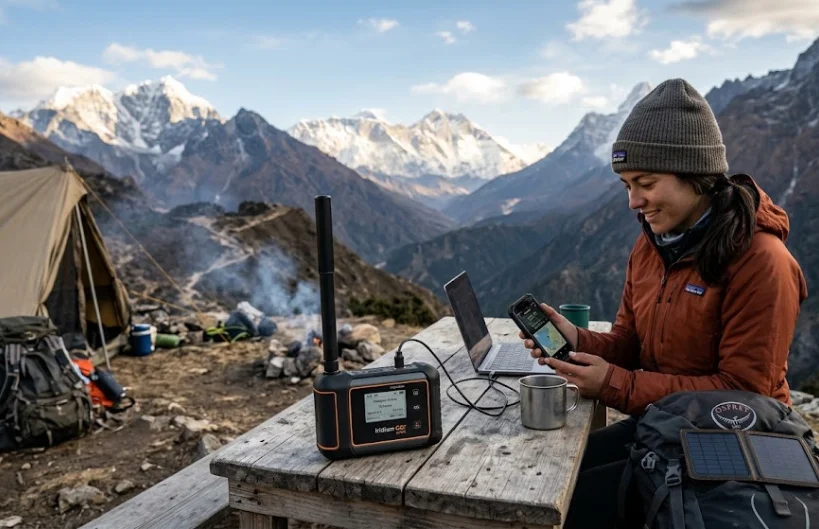
A satellite hotspot gives phones and other devices a connection where cellular networks cannot reach. It communicates with satellites instead of nearby cell towers. That makes it useful for remote travel, boating, emergencies, fieldwork, and off-grid locations.
These devices are not all designed for normal broadband internet. Many focus on calls, texts, weather information, tracking, and compressed email. Faster satellite terminals can handle more data, but their size and cost usually increase.
Direct answer: A satellite hotspot connects to an orbiting satellite and creates a local Wi-Fi connection for your devices. In the United States, it can provide communication beyond cellular coverage. Performance depends on the network, equipment, sky visibility, service plan, and the type of data you need.
Satellite Hotspot Quick Facts
| Question | Practical answer |
|---|---|
| Does it need cell service? | No |
| Does it usually create Wi-Fi? | Yes |
| Can it support phone calls? | Many models can |
| Can it send messages? | Yes, depending on the service |
| Can every model stream video? | No |
| Does it require a clear sky? | Usually, yes |
| Is a service plan required? | Usually |
| Common US uses | Camping, boating, fieldwork, emergencies, remote travel |
Key Takeaways
* Satellite devices work where cellular towers may be unavailable. * Traditional portable hotspots often prioritize communication over broadband speed. * Broadband satellite systems are better for normal web use and video. * Iridium-based equipment is commonly considered for broad geographic coverage. * Equipment cost is only one expense because service plans also matter. * Trees, buildings, mountains, and canyon walls can weaken the connection.
What Is a Satellite Hotspot and How Does It Work?
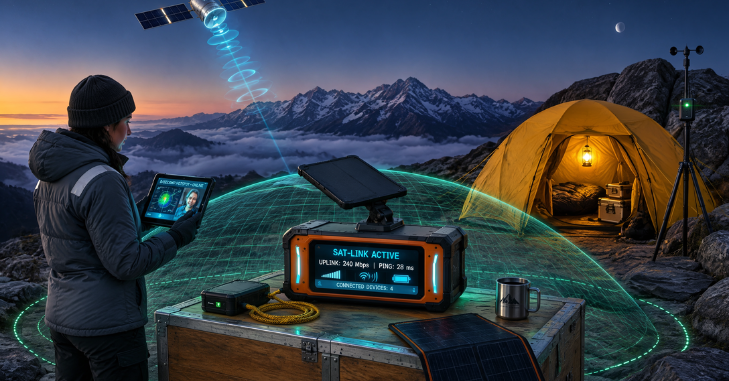
A satellite hotspot is a portable communication device that connects directly with a satellite network. It then shares supported services with your smartphone, tablet, or computer. Many models create a private Wi-Fi network for nearby devices.
Your phone normally connects to a terrestrial cell tower before reaching the wider network. Satellite equipment replaces that first terrestrial connection with a link to orbiting infrastructure. The device still needs suitable sky visibility for dependable communication.
Some models depend heavily on a companion smartphone application. The application may handle calling, messaging, weather downloads, or tracking. Other terminals provide Ethernet, touchscreen controls, or additional ports for professional users.
Satellite Hotspot Versus a Regular Mobile Hotspot
A cellular hotspot and a satellite device solve different coverage problems. A cellular model depends on carriers such as Verizon, AT\&T, or T-Mobile. Once those networks disappear, the cellular hotspot usually loses its connection too.
Satellite equipment does not depend on a nearby cellular tower. It can therefore work in places far outside ordinary mobile coverage. That advantage often comes with slower speeds, higher service costs, and stricter sky-view requirements.
| Feature | Cellular hotspot | Traditional satellite hotspot | Satellite broadband terminal |
|---|---|---|---|
| Network | Cellular towers | Satellite network | Satellite broadband network |
| Remote-area usefulness | Limited by carrier | Strong | Strong |
| Voice and messaging | Internet apps | Often supported directly | Internet apps |
| Normal web browsing | Usually good | Often limited | Usually suitable |
| Streaming | Usually possible | Usually unsuitable | Often possible |
| Portability | Excellent | Excellent | Varies |
| Typical cost | Lower | Higher | Higher |
Current satellite sellers describe devices such as Iridium GO models as communication tools for calling, messaging, tracking, weather, and limited data. They should not be confused with high-bandwidth home internet.
Can You Get Real Internet From One?
That depends on what you call internet access. Traditional handheld models may move data at speeds measured in kilobits rather than modern broadband megabits. They are better suited to small messages and specialized applications than everyday browsing.
Satellite broadband equipment serves a different purpose. Systems such as portable Starlink hardware target web browsing, remote work, streaming, and other higher-bandwidth activities. Current US portable-internet comparisons place those systems in a separate category from narrowband communication devices.
Consider your actual requirement before buying anything. A hiker sending daily check-ins has different needs from a remote employee joining video meetings. Paying for broadband capacity makes little sense when dependable messaging is the real goal.
Popular Types Available to US Users
Iridium equipment is prominent in the US portable satellite market. The original Iridium GO focuses on voice, text, email, weather, tracking, and related services. Sellers currently position the GO exec as a faster option with expanded connectivity and two voice lines.
Globalstar equipment provides another approach, although its coverage characteristics differ from Iridium. Coverage should always be checked against your exact destination before purchase. A device is only valuable when its supporting network serves your route.
Some international systems are poor choices for US travel. Satmodo notes that Thuraya coverage does not extend across the Americas. US buyers should therefore verify network geography before comparing attractive hardware features.
Which Type Is Best for Your Situation?
The right choice depends more on your intended activity than the device specification sheet. Start by deciding whether communication or broadband matters most. Then compare coverage, power requirements, service costs, and portability.
Camping and Backcountry Travel
Compact communication equipment suits trips where weight and emergency contact matter. Messaging, weather forecasts, GPS functions, and occasional calls may cover your essential needs. A full broadband terminal can be unnecessary for a short wilderness trip.
Power planning becomes equally important on longer journeys. Magazinexu also covers using a solar power generator in challenging conditions, which can help when planning off-grid electronics. Portable communication is much more useful when you can keep it charged.
Boating and Offshore Use
Offshore users often need weather files, position reports, messages, and dependable calling. Satellite communications can continue well beyond shore-based mobile coverage. Some equipment also supports external marine antennas for more practical vessel installations.
Weather and environmental conditions still influence any trip. Magazinexu’s guide to weather conditions and boating decisions provides useful planning context. Communication equipment should support a broader safety plan rather than replace one.
RV Travel and Remote Work
RV travelers usually need more data than hikers or boaters sending occasional messages. Broadband satellite equipment becomes more attractive when laptops, cloud services, or video meetings are involved. Portable Starlink systems are commonly discussed for this higher-bandwidth use case.
Energy consumption also matters for extended off-grid stays. Magazinexu’s guide to larger solar battery storage explains another part of remote power planning. Connectivity and power capacity should be considered together for longer trips.
What Does Satellite Connectivity Cost?
Costs vary widely because hardware and service are usually separate purchases. Traditional communication devices can cost hundreds or more than a thousand dollars. Current US seller listings show that equipment pricing changes significantly between models and capabilities.
Broadband hardware introduces another pricing structure. Current portable-internet guides also list monthly service plans alongside the equipment price. Buyers should compare total ownership cost instead of focusing on the device alone.
You may also need accessories such as external antennas, protective cases, vehicle power adapters, or mounting hardware. Marine and professional installations can add more equipment. Check every required component before calculating your budget.
What Affects Satellite Performance?
Clear sky visibility is one of the biggest factors affecting satellite connections. Heavy tree cover, tall buildings, cliffs, and canyon walls can obstruct the signal path. Repositioning equipment may improve reliability when the surrounding terrain allows it.
The satellite network also influences coverage and performance. Different constellations use different satellite architectures and geographic footprints. A model that performs well in one region may be unsuitable elsewhere.
Weather can also influence some satellite links, especially higher-frequency broadband systems. Equipment placement and antenna orientation remain important under difficult conditions. Always follow the manufacturer’s setup guidance for your chosen terminal.
Five Things to Check Before You Buy
1. Coverage: Confirm the network works across every state, offshore area, or country you plan to visit. 2. Data needs: Decide whether you need messages, calls, email, web browsing, or streaming. 3. Service pricing: Compare monthly plans, prepaid airtime, data allowances, and activation costs. 4. Power: Check battery life and determine how you will recharge the equipment remotely. 5. Device dependence: Confirm whether the terminal needs a smartphone application to provide key features.
These checks prevent the most common purchasing mistake. Buyers sometimes choose a compact communication device while expecting home-internet performance. Others buy an expensive broadband system when emergency messaging would meet their needs.
Is It Worth Buying?
For people who regularly leave cellular coverage, satellite communications can provide meaningful practical value. The strongest cases involve safety, remote operations, offshore travel, and communication from isolated locations. Occasional urban travelers may gain little from the added expense.
For broadband users, the decision is different. Frequent remote workers or RV travelers may benefit from portable satellite internet more than narrowband equipment. Their higher data requirements justify larger hardware and higher service costs.
For communication-first users, simpler satellite equipment may be the smarter purchase. Identify the minimum connection you need before comparing products. That approach keeps costs under control without sacrificing necessary coverage.
The Bottom Line
Satellite connectivity is most valuable when ordinary mobile networks stop working. Traditional hotspots are strongest for communication, safety, weather, and limited data. Broadband satellite terminals make more sense when you need normal internet applications.
Choose the network before becoming attached to a particular device. Confirm coverage, required speed, power needs, and total service cost first. You can then select equipment that fits your actual travel or remote-work routine.
For more technology coverage and related off-grid topics, explore the Magazinexu Tech section. Its existing power and technology content can complement planning for remote connectivity. A well-planned setup combines dependable communication with reliable power.
Frequently Asked Questions
What is a satellite hotspot?
A satellite hotspot communicates with satellites and shares supported services with nearby phones or computers. Many units create Wi-Fi so a smartphone can use dedicated calling, messaging, weather, or email applications. The exact features depend on the hardware and satellite network.
Does it work anywhere in the United States?
Coverage depends on the network rather than the word “satellite” alone. Iridium markets broad global coverage, while other networks have more limited footprints. Check your exact destination before depending on any device.
Can I watch Netflix or YouTube through one?
Traditional narrowband models are generally poor choices for streaming. Their services focus on voice, text, weather, tracking, and small data transfers. Broadband satellite terminals are better suited to video and normal internet use.
Do I need a subscription?
Most satellite communication products require an active service plan or prepaid airtime. Plans vary by network, data allowance, and supported services. Review recurring charges before buying the hardware.
Will it work inside a building?
Performance is usually strongest with a clear view of the sky. Roofs and other structures can block or weaken satellite signals. External antennas can help certain installations when the equipment supports them.