
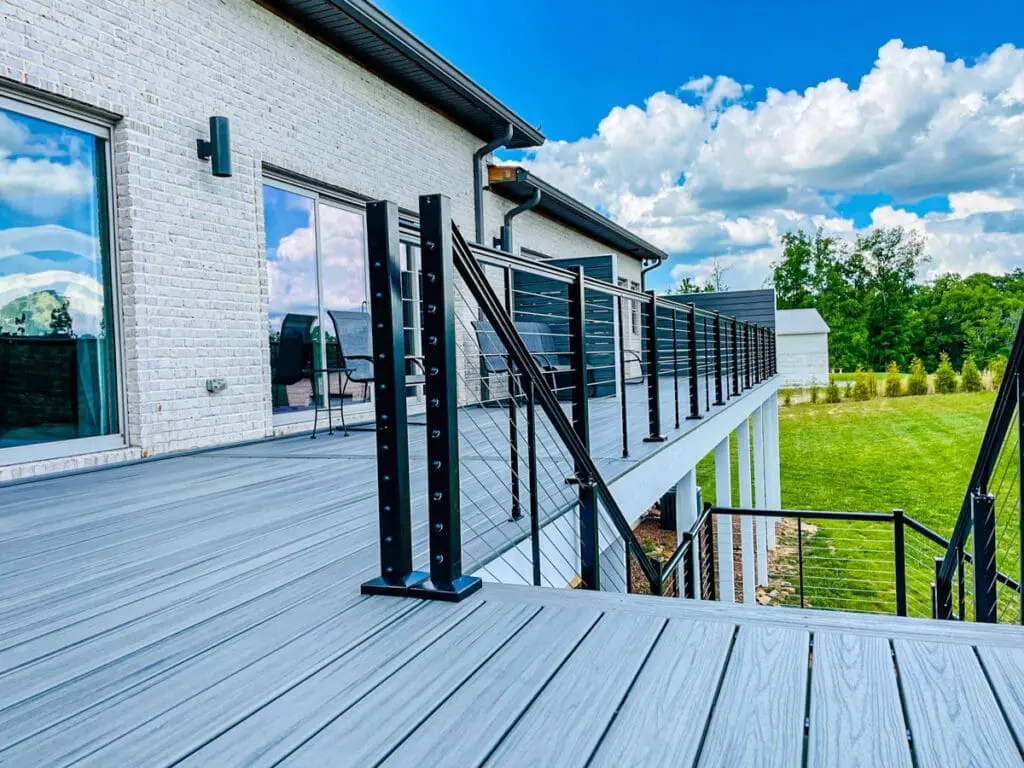
Last Updated on October 18, 2026 by Rida Gul
Trex decking is a capped composite board made largely from recycled wood fiber and plastic film, and its main appeal is that it never needs sanding, staining or sealing. It resists rot, splintering and insect damage, and routine care is mostly an occasional wash. It costs more upfront than pressure-treated lumber, so the real question is whether the time and money saved on maintenance over the deck’s life make it worth it for you. This guide covers how Trex is made, the current product lines, maintenance, installation details and the trade-offs to weigh.
What Trex decking is made of
Trex boards combine reclaimed wood fiber (such as sawdust) with recycled polyethylene plastic film, the kind used for grocery bags and shrink wrap. Trex states that its boards are made from 95% recycled materials. Current lines are capped composites: the core is wrapped in a harder polymer shell that protects against fading, staining, scratching and moisture. That shell is what separates today’s boards from the uncapped composites of the 1990s and 2000s, which were more prone to mold and staining.
Why homeowners choose low-maintenance composite
- No staining or sealing. A wood deck typically needs cleaning and re-staining every few years. Composite skips that cycle entirely.
- No rot, splinters or termites. The boards do not absorb water the way wood does, and insects do not feed on them, which is especially welcome around pools and for families with young children.
- Consistent color. The cap layer resists fading and staining from spills, so the deck looks much the same years later.
- Long warranties. Trex backs its lines with limited residential and fade and stain warranties that run for decades.
Trex decking lines compared
Trex sells several collections at different price points. Learning the types of Trex decking helps you match texture, color, scratch resistance and budget to how you will use the deck. At the time of writing, Trex lists the following lines:
| Line | Position | Board profile | Fade and stain warranty (limited residential) |
|---|---|---|---|
| Trex Signature | Top tier, highest scratch resistance | Solid | 50 years |
| Trex Transcend Lineage | Premium, lighter and multitonal colors | Solid | 50 years |
| Trex Transcend | Premium, rich tropical-style colors | Solid | 50 years |
| Trex Select | Mid-range | Solid | 35 years |
| Trex Enhance | Entry level, most budget friendly | Scalloped (lighter, grooved underside) | 25 years |
Warranty terms, colors and line names change from time to time, so confirm the current details on Trex’s website or with your installer before ordering. Scalloped boards like Enhance weigh less and cost less, while solid boards feel more substantial underfoot and are common on premium decks.
Maintenance: what low-maintenance really means
Low-maintenance is not no-maintenance. Composite still collects dirt, pollen and leaves, and debris left in shady, damp spots can lead to surface mold or mildew. The good news is that cleaning is simple:
- Sweep regularly and clear the gaps between boards so water drains freely.
- Wash a couple of times a year with warm soapy water and a soft-bristle brush, then rinse.
- Wipe up grease, food and wine spills promptly; the cap resists stains, but the sooner you clean, the easier it is.
- Use a plastic-edged shovel for snow, and check Trex’s care guide for approved ice-melt products and pressure washer limits before using either.
- Avoid dragging heavy furniture or grills across the surface, and use pads under planters.
Compare that with a typical wood deck, which needs power washing, sanding of rough spots and a fresh coat of stain or sealer every few years to stay protected. Over 15 to 25 years, those weekends and material costs add up.
Trex vs pressure-treated wood
| Factor | Trex composite | Pressure-treated wood |
|---|---|---|
| Upfront material cost | Higher | Lower |
| Ongoing upkeep | Washing only | Cleaning, sanding, staining or sealing every few years |
| Rot, splinters, insects | Resists all three | Treated to resist rot and insects, but can crack, warp and splinter as it weathers |
| Appearance over time | Color stays largely consistent | Grays and weathers without regular finishing |
| Heat in direct sun | Can get hot, especially darker colors | Generally cooler to the touch |
| Recycled content | High (Trex cites 95%) | Virgin lumber, chemically treated |
Composite usually wins on lifetime effort, while wood wins on upfront price. Many homeowners find the extra initial cost is offset over time by skipped stain, sealer and labor, but that depends on how long you plan to stay in the home and whether you would do the maintenance yourself. If budget is the sticking point, it may be worth reading about how home improvement financing works before deciding.
Installation details that affect performance
The boards are only as good as the structure beneath them. Most composite decks are still framed with pressure-treated lumber, and a few details make a big difference to how the finished deck looks and lasts:
- Joist spacing. Composite boards need closer joist spacing than some wood decks. Trex’s installation guide specifies spacing by product and by board angle, with diagonal layouts needing tighter spacing.
- Gapping. Composite expands and contracts with temperature, so boards need correct side and end gaps. Hidden fastener clips set the side gap automatically.
- Ventilation and drainage. Low decks need airflow underneath, and the framing should shed water rather than trap it.
- Permits and code. Most towns require a permit for attached or elevated decks, with inspections of footings, ledger attachment and railings.
Because warranty coverage can depend on following the manufacturer’s installation instructions, many homeowners hire an experienced installer. In central Ohio, for example, local builders that offer Trex decking in Westerville handle design, permits and construction, and are familiar with the freeze-thaw cycles that test footings and framing in the region. Wherever you live, ask any contractor for proof of license and insurance where required, photos of composite decks they have built, and a written quote that separates framing, decking, railing and permit costs.
Design options
Composite gives you more design freedom than you might expect. Contrasting picture-frame borders, diagonal or herringbone inlays, multi-level layouts, built-in benches, matching railings, fascia boards to hide the framing, and low-voltage deck lighting are all common. A deck works best when it connects naturally to the house, so think about traffic flow from the kitchen or living room; the right patio doors for indoor-outdoor living can make the deck feel like an extra room.
Planning your Trex deck
Before requesting quotes, answer a few practical questions. They shape the size, board choice and budget, and they help contractors give you comparable prices.
- How will you use it? A dining table for six, a grill station and a lounge area each need their own space. Mark the footprint on the lawn with stakes and string to get a feel for the size.
- How much sun does it get? A south- or west-facing deck in full sun is a good case for a lighter color, a pergola or a shade sail.
- Is the existing frame reusable? Resurfacing an old wood deck with composite boards can save money, but only if the framing is sound and spaced correctly for composite. Have it inspected first.
- Who uses it? Pets and active kids argue for a more scratch-resistant line; a quiet adult retreat may be fine with an entry-level board.
- What does your HOA or town require? Check setback rules, railing height requirements and any color or material restrictions before finalizing the design.
Ordering free samples of two or three colors and leaving them outside for a few days is a simple way to see how they look in your own light and how warm they get in the afternoon sun.
Drawbacks to consider
- Higher upfront cost than pressure-treated lumber.
- Surface heat in full summer sun, particularly darker colors. Lighter shades and shade structures help.
- Scratches from pets, furniture or dropped tools can show, and lower-tier lines are less scratch resistant.
- Not a structural material. Composite boards are not used for posts, beams or joists, so the framing still needs to be sound.
- Can’t be refinished like wood. You cannot sand out deep damage, though individual boards can be replaced.
Frequently asked questions
How long does Trex decking last?
Trex backs its current lines with limited residential fade and stain warranties of 25 to 50 years depending on the collection. Actual life also depends on proper installation and a sound substructure.
Does Trex decking need to be sealed or stained?
No. The capped surface does not need sanding, staining or sealing. Routine care is sweeping and occasional washing with soap and water.
Can Trex decking get moldy?
The boards resist mold, but mold or mildew can grow on dirt and debris left on the surface in damp, shaded areas. Regular cleaning prevents it.
Is Trex decking eco-friendly?
Trex says its boards are made from 95% recycled materials, including reclaimed wood fiber and plastic film, and they do not need chemical stains or sealers over their life.