
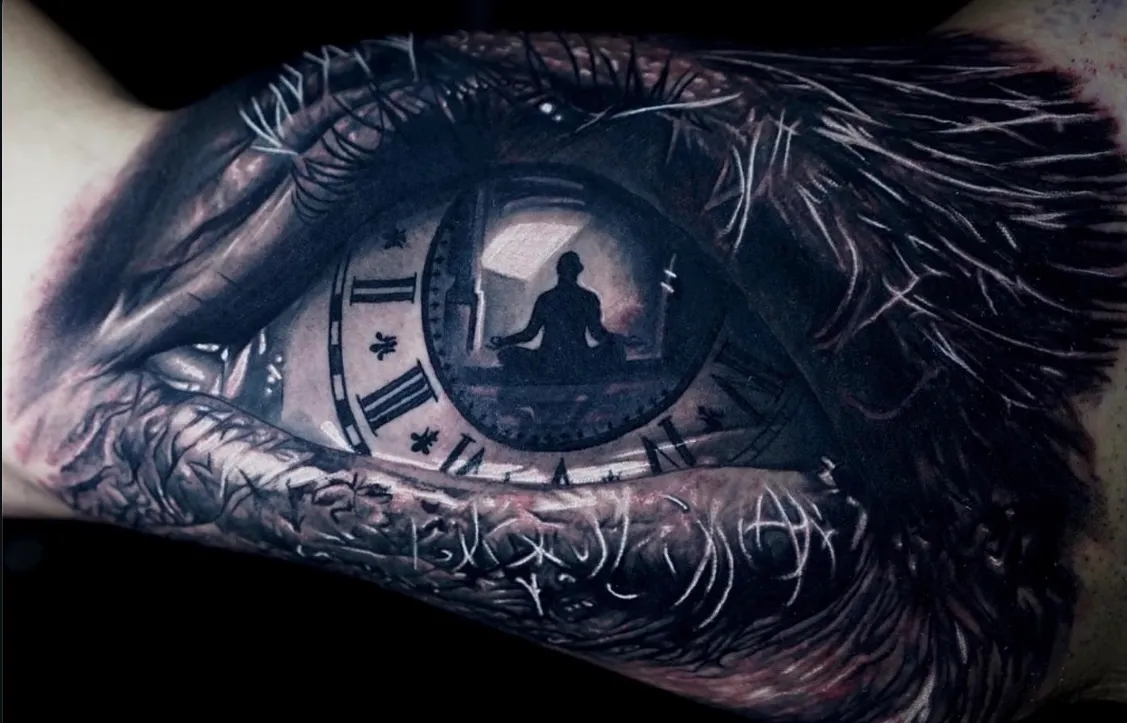
Tattoos usually start with a visual idea, but they almost always end up meaning more than that. A simple symbol can represent growth, healing, strength, or a chapter of life someone doesn’t want to forget. That’s why certain tattoo designs stay popular across cultures and generations. They speak a shared language, even when the meaning behind it is deeply personal.
Below is a closer look at common tattoo designs, abstract symbols, and how context shapes what they represent.
Common Tattoo Designs and Their Symbolism
Many popular tattoo designs come from animals and nature because they’re easy to connect to emotionally and visually.
Animals
- Lion – Courage, strength, leadership, and inner power
- Butterfly – Transformation, rebirth, and personal growth
- Wolf – Loyalty, family bonds, instinct, and independence
- Snake – Healing, rebirth, and transformation
- Eagle – Freedom, power, and spiritual awareness
- Koi Fish – Perseverance, ambition, and overcoming adversity
Nature & Celestial Designs
- Rose – Love, beauty, passion, and balance
- Tree – Growth, resilience, and life itself
- Sun – Energy, strength, and vitality
- Moon – Intuition, femininity, and life cycles
- Lotus Flower – Purity, enlightenment, and spiritual awakening
Symbols, Abstract Designs, and Spiritual Meaning
Symbols and abstract designs are popular because they can say a lot with very little detail. These tattoos often feel timeless and deeply personal.
Symbolic & Spiritual Tattoos
- Infinity Symbol – Eternity, endless love, and limitless possibilities
- Anchor – Stability, security, and hope during hard times
- Mandala – Balance, harmony, and unity
- Skull – Mortality, protection, and strength through challenges
- Phoenix – Rebirth, renewal, and rising from adversity
- Arrows – Direction, focus, and moving forward
Cultural and spiritual symbols like the Hamsa, Om, Trishul, Rudraksha, and Celtic or Norse knots often reflect protection, spiritual awareness, ancestry, and cultural identity.
How Context Changes Tattoo Meaning
Tattoo meanings aren’t fixed. The same design can represent very different things depending on context.
- Traditional meaning – Sailors used anchors for stability and swallows to symbolize returning home safely
- Modern meaning – Many people choose symbols like phoenixes or butterflies for healing and personal growth
- Cultural meaning – Polynesian, Japanese, and Native American tattoos often represent heritage, status, and spiritual beliefs
Personal experiences often matter more than textbook definitions.
Final Thoughts
Popular tattoo designs stay popular because they reflect universal experiences like growth, struggle, love, and transformation. Whether your tattoo is deeply symbolic or simply feels right, the most important meaning is the one it holds for you. This post was written by a professional at Till the End Tattoos. Till the End Tattoos is a full-service tattoo studio in Miami, Florida, specializing in realism, fine line, micro-realism, portraits, and large-scale custom work. Serving clients throughout Miami and Tampa, our skilled team provides expert guidance and ensures high-quality results. For anyone seeking a trusted tattoo studio near you focused on precision, artistry, and performance, explore our realism tattoo artist in Miami.
Frequently Asked Questions
No. Some tattoos are chosen purely for how they look, and that’s completely valid.
Yes. Meaning can change based on culture, placement, and personal interpretation.
Definitely. Many people combine symbols to tell a more personal story.
Yes, especially to understand their significance and avoid misuse.