
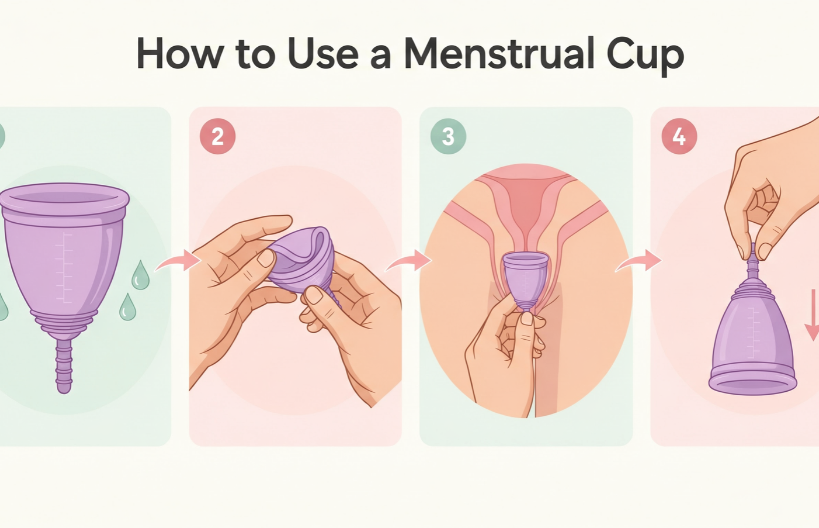
Learning how to use a menstrual cup can feel awkward during your first few attempts. The basic process becomes easier once you understand folding, placement, removal, and cleaning. Most beginners need some practice before insertion and removal feel routine. A cup collects menstrual fluid inside the vagina rather than absorbing it. Reusable versions can be emptied, cleaned, and used again according to their product instructions. When positioned correctly, you generally should not feel it during normal activities. Quick answer: Wash your hands, fold the cup, and gently insert it into your vagina. Let it open completely so it can collect menstrual flow. Remove it by breaking the seal at the base, then empty and clean it according to the manufacturer’s instructions.
| What to know | Beginner guidance |
|---|---|
| Purpose | Collects menstrual fluid inside the vagina |
| Typical wear time | Up to 8–12 hours, depending on the product and your flow |
| Insertion | Fold, insert, and allow the rim to open |
| Removal | Pinch the base to release the seal before pulling |
| Cleaning | Follow the manufacturer’s washing and sanitizing directions |
| Overnight use | Often possible when the product permits up to 12 hours |
| Swimming and exercise | Generally possible when the cup fits correctly |
| Main beginner challenge | Learning comfortable placement and removal |
Wear-time instructions vary between products. Planned Parenthood says many cups can be worn for eight to twelve hours. Kaiser Permanente also notes that some brands allow use for up to twelve hours.
What Is a Menstrual Cup?

A menstrual cup is a flexible device placed inside the vagina during a period. It catches menstrual fluid instead of absorbing it like a tampon. Products sold in the United States are regulated by the FDA as medical devices. Cups come in different shapes, firmness levels, and sizes. Some are reusable, while other products are designed for limited or disposable use. Always follow the instructions supplied with the specific product you purchase.
What You’ll Need Before You Start
You do not need complicated equipment for your first attempt. A private bathroom and enough time to practice can make the process easier. Avoid rushing when you are still learning the technique.
* Your chosen cup and its instruction booklet. * Soap and clean water for your hands. * Water for rinsing when your product allows it. * Water-based lubricant, if recommended and needed. * A clean storage container or breathable pouch. * A pantyliner or period underwear for optional backup.
How to Use a Menstrual Cup? A small amount of water-based lubricant may make insertion easier for some beginners. Cleveland Clinic recommends placing a thin layer around the rim when extra lubrication is needed. Check your product instructions before applying anything to the material.
How to Use a Menstrual Cup Step by Step
The goal is to place the folded device inside the vaginal canal comfortably. Once released, the rim opens and creates contact with the vaginal walls. Correct positioning helps reduce leaks and discomfort.
1. Wash your hands. Use soap and water before touching the product or your genital area. 2. Prepare the cup. Clean it according to the manufacturer’s directions before insertion. 3. Fold the rim. A C-fold or punch-down fold can make the top narrower. 4. Choose a comfortable position. Try sitting, squatting, or standing with one leg raised. 5. Insert it gently. Guide the folded rim backward toward your tailbone rather than straight upward. 6. Let the fold open. Release your grip once the product is fully inside. 7. Check the position. Feel around the base to confirm it has opened without obvious folds. 8. Monitor your flow. Empty it before reaching your product’s maximum recommended wear time.
Do not force insertion if you experience sharp pain. Relaxing your pelvic muscles often makes the process easier. You can remove the product and try another position or fold.
Which Fold Is Best for Beginners?
The C-fold is one of the simplest techniques to learn. Flatten the cup, then fold it in half to create a C-shaped rim. Its simplicity makes it useful when practicing insertion for the first time. A punch-down fold creates a smaller insertion point. Push one section of the rim downward into the cup, then hold the sides together. Try both methods because anatomy and product firmness differ between users.
How Do You Know It Is Inserted Correctly?
A correctly placed cup should usually feel comfortable during walking, sitting, and normal movement. You should not experience persistent pinching or significant pressure. The stem also should not cause ongoing irritation. Run a clean finger around the base after insertion. A smooth, open base suggests the rim has unfolded. Some products may need slight rotation or repositioning according to their instructions. A small leak during your first cycles does not necessarily mean the product cannot work for you. Placement, sizing, flow level, or an incomplete opening may cause leakage. Wearing period underwear as backup can reduce stress while you practice.
How to Remove the Cup Without Pain
Removal becomes easier when you release the seal before pulling downward. Pulling hard on the stem alone can create discomfort. Use the stem mainly to help locate the base unless your manufacturer says otherwise.
1. Wash and dry your hands. 2. Sit on the toilet or squat comfortably. 3. Reach the base with your fingers. 4. Pinch the base to release the seal. 5. Gently move the cup downward. 6. Keep it upright as it leaves the vagina. 7. Empty the contents into the toilet.
If the product seems too high, avoid panicking or pulling aggressively. Relax your pelvic muscles and gently bear down to bring the base closer. Try again after a short break if your muscles become tense. Persistent difficulty deserves medical advice rather than repeated forceful attempts. Planned Parenthood recommends contacting a healthcare professional when insertion causes significant pain. The same approach is sensible when removal remains painful or unusually difficult.
How Long Can You Wear It?
Many products allow wear for up to twelve hours. Your actual schedule depends on your flow and the manufacturer’s directions. Heavy-flow days may require emptying much sooner. Check the product more frequently during your first cycle. This helps you learn how quickly it fills on different days. Never exceed the maximum wear time listed by the manufacturer.
How to Clean It Safely
Wash your hands before and after handling any internal period product. The FDA’s menstrual product guidance recommends regular changing and careful hand hygiene for menstrual products. Good cleaning practices also help prevent unwanted bacterial growth. Cleaning directions differ between manufacturers and materials. Many reusable products require washing between uses and additional sanitizing between cycles. Follow your own brand’s directions for soap, boiling, storage, and cleaning frequency. Avoid scented cleansers unless the manufacturer specifically approves them. Strong fragrances or unsuitable cleaning products can irritate sensitive tissue. Rinse thoroughly whenever the instructions permit washing with soap.
What If the Cup Leaks?
An incomplete opening is a common reason for beginner leaks. Remove and reinsert the product if the base remains folded. Changing your folding technique can also help the rim open properly. Incorrect positioning may cause leakage even when the product has opened. Your cervix can sit at different heights during your cycle. Finding a comfortable position may require several attempts during early use. Capacity also matters on heavier days. A full product cannot continue collecting fluid effectively. Emptying it more often can solve leaks caused by heavy menstrual flow.
Can You Sleep, Exercise, or Swim While Wearing One?
Many users can sleep while wearing one when the manufacturer permits the required wear time. Check how long it has already been inserted before going to bed. Emptying it before sleep can make overnight use easier. Cups can also be used during exercise and swimming. Internal placement means there is no absorbent string outside the body. A secure fit should remain comfortable during typical movement.
Are Menstrual Cups Safe?
Research generally supports their safety when they are used correctly. A 2026 systematic review found no increased infection risk across the infections evaluated. The authors also noted limitations in the number and quality of available studies. Toxic shock syndrome (TSS) has been reported with cup use, but published reports are uncommon. A major systematic review identified several reported cases among the available safety data. Proper hygiene and following wear-time instructions remain important precautions. Warning signs of TSS include a sudden high fever, a sunburn-like rash, vomiting or diarrhea, muscle aches, headache, confusion, and dizziness or fainting. If you notice any of these, remove the cup and seek emergency medical care right away. Also seek medical care for severe pain, unusual discharge, or other concerning symptoms. The FDA advises contacting a healthcare professional for pain, fever, or unusual symptoms related to menstrual-product use. Do not continue using a product that causes significant pain.
What If You Have an IUD?
People with an intrauterine device should discuss cup use with their healthcare professional. Recent research suggests concurrent use may increase displacement or expulsion risk in some circumstances. Evidence also indicates that the level of risk may differ between IUD designs. Removal technique may matter because pulling without breaking the seal could create unnecessary force. Always release the seal before removing the product. Ask your clinician for personalized advice about your IUD strings and menstrual-product choices.
Common Beginner Mistakes to Avoid
The learning curve becomes easier when you know which problems are preventable. Most early difficulties involve placement, timing, hygiene, or removal technique. Give yourself several attempts before deciding whether a different size or style is needed.
* Pulling the stem without first releasing the seal. * Wearing it longer than the manufacturer’s limit. * Inserting it without washing your hands. * Assuming one fold works for everyone. * Ignoring ongoing pain or unusual symptoms. * Using cleaning products not approved for the material. * Expecting perfect insertion during the first attempt.
Practicing at home can reduce pressure during your first cycle. Keep backup period protection nearby while learning how your flow affects emptying frequency. Comfort usually improves as you become familiar with insertion and removal.
The Bottom Line
Using a cup becomes much simpler once folding, placement, and seal release become familiar. Start slowly, follow the manufacturer’s directions, and never force an uncomfortable insertion. Good hand hygiene and regular emptying are central to safer use. Your first cycle may involve several attempts before everything feels natural. Pay attention to comfort and adjust your technique instead of tolerating persistent pain. For more on cycle health, see our article on acupuncture and menstrual cycle regulation.
Frequently Asked Questions
Does inserting a cup hurt?
Insertion should not cause significant pain. Mild awkwardness can happen while you learn the technique. Stop and speak with a healthcare professional if attempts remain painful.
Can it get lost inside your body?
It cannot travel from the vagina into the rest of your body. The cervix prevents it from moving into the uterus. You may need to relax and bear down if it sits higher than expected.
Can a virgin use one?
Previous sexual activity is not required to use an internal menstrual product. Comfort, anatomy, and personal preference are more relevant factors. Anyone experiencing pain should stop rather than forcing insertion.
How often should beginners empty it?
Follow your manufacturer’s maximum wear time and empty sooner when needed. Heavy-flow days usually require more frequent checks. Beginners can check more often until they understand their typical flow pattern.
How to use a menstrual cup for the first time successfully?
Start when you have privacy and enough time to practice. Try a simple fold and relax your pelvic muscles during insertion. Use backup protection until you know the product’s fit and capacity.
When to Ask a Healthcare Professional
Contact a clinician if insertion or removal repeatedly causes significant pain. You should also seek help for fever, unusual discharge, severe irritation, or other unexpected symptoms. These problems should not be treated as a normal learning curve. You should also ask for individualized advice if you use an IUD. Current evidence supports discussing possible displacement or expulsion risks with a qualified professional. Proper technique cannot replace personalized medical guidance.