
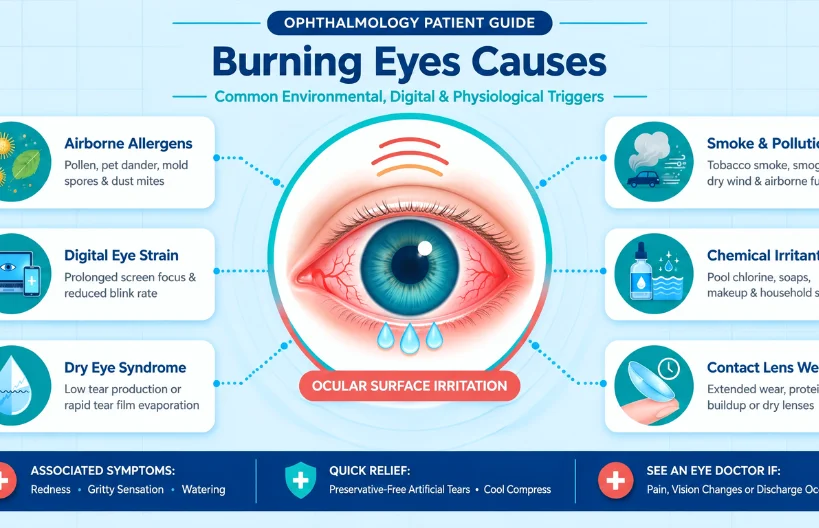
A burning or stinging feeling in your eyes can be uncomfortable and distracting. Burning eyes causes range from everyday dryness to allergies, infections, and chemical exposure. The symptoms around the burning sensation often provide useful clues about what may be happening. Burning eyes are often caused by dry eye, allergies, smoke, chemicals, contact lenses, or conjunctivitis. Mild irritation may improve after removing the trigger and using artificial tears. Severe pain, vision changes, injury, or chemical exposure needs prompt medical attention.
Burning Eyes Causes at a Glance
| Possible cause | Common clues | Typical next step |
|---|---|---|
| Dry eye | Gritty, tired, watery, or stinging eyes | Lubricating drops and trigger reduction |
| Eye allergies | Itching, tearing, redness, swelling | Avoid allergens and consider allergy treatment |
| Smoke or air irritants | Burning after exposure | Move to clean air and rinse if needed |
| Contact lenses | Burning, redness, discomfort | Remove lenses and use glasses |
| Conjunctivitis | Redness, tearing, discharge | Medical assessment if symptoms persist |
| Blepharitis | Crusted, irritated eyelid edges | Eyelid hygiene and medical advice |
| Screen-related dryness | Tired, dry eyes after prolonged viewing | Blink more and take screen breaks |
| Foreign material | Gritty feeling or one-sided discomfort | Gentle rinsing; seek care if it remains |
| Chemical exposure | Sudden intense burning | Rinse immediately and seek expert help |
1. Dry Eye Is One of the Most Common Causes
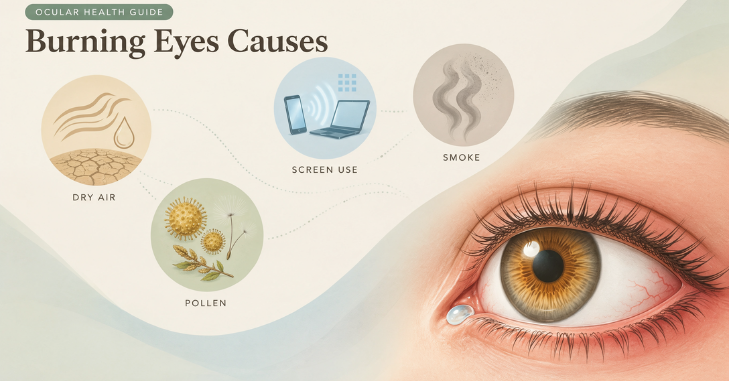
Dry eye happens when your tears do not keep the eye’s surface properly lubricated. Your tears may evaporate too quickly, or your eyes may make too little fluid. The result can include burning, stinging, redness, blurred vision, and a gritty sensation. Air conditioning, heating, wind, smoke, and low humidity can make dryness worse.
Long periods of reading or computer use can also reduce normal blinking. Less blinking allows moisture on the eye’s surface to evaporate more quickly. The National Eye Institute reports that nearly 16.4 million Americans have dry eye, so it is a common reason for burning. Dry eye does not always mean your eyes feel dry. Irritated eyes can produce extra reflex tears, causing unexpected watering. This combination of watering and burning can confuse people trying to identify the cause.
2. Seasonal and Indoor Allergies
Eye allergies can cause strong itching, redness, watering, swelling, and burning. Common U.S. triggers include pollen, mold, dust, and pet dander. Smoke, perfume, cosmetics, and certain eye-drop ingredients may also trigger symptoms. Allergies are more likely when itching is a major part of the problem.
Nasal congestion, sneezing, or an itchy nose can strengthen that possibility. Allergic conjunctivitis is not contagious because an allergen causes the reaction. Avoid rubbing irritated eyes, even when itching feels intense. Rubbing can worsen inflammation and swelling around the eye. Cool compresses and appropriate allergy treatment may provide relief.
3. Smoke, Wind, Chlorine, and Other Irritants
Environmental irritants can affect people who do not have allergies. Cigarette smoke, wildfire smoke, smog, dust, strong wind, and dry air may disturb the tear film. Pool chlorine can also leave the eyes stinging after swimming. Many cases improve after the exposure stops.
Moving into clean air and avoiding further contact can help the surface recover. Lubricating eye drops may also soothe mild irritation. Pay attention to repeated symptoms in the same environment. A workplace fan, heating vent, or smoky setting may be the overlooked trigger. Identifying that pattern can prevent repeated irritation.
4. Contact Lens Problems
Contact lenses can contribute to dryness and irritation, especially after prolonged wear. A damaged or poorly fitting lens may also produce burning and redness. Deposits or sensitivity to lens-care products can create similar symptoms. Remove your lenses if your eyes become painful, unusually red, or persistently irritated. Switch to glasses until the problem has settled and the cause is clear.
Do not force yourself to continue wearing uncomfortable lenses. Contact lens wearers should take worsening symptoms seriously. Certain corneal infections can develop quickly and threaten vision. Prompt evaluation is appropriate when pain, light sensitivity, discharge, or vision changes develop.
5. Conjunctivitis and Other Eye Infections
Conjunctivitis can result from viruses, bacteria, or allergic reactions. Infectious forms may cause redness, tearing, crusting, or discharge along with irritation. Symptoms can affect one eye first and later involve the other. Viral and bacterial conjunctivitis are different from allergic eye problems.
Treatment also varies depending on the underlying cause. Antibiotic drops do not treat viral infections or ordinary dry eye. Avoid sharing towels, cosmetics, or other items that touch the eye area. Wash your hands regularly when an infection may be present. Seek medical advice when discharge, pain, swelling, or persistent redness develops.
6. Blepharitis and Eyelid Inflammation
Blepharitis is inflammation along the edges of the eyelids. It can cause redness, burning, crusting, irritation, and a gritty feeling. Some people notice flakes or oily material around their eyelashes. The condition can interfere with the oil layer of your tears. That change allows tears to evaporate more quickly from the eye’s surface.
Dryness and eyelid inflammation can therefore occur together. Warm compresses and careful eyelid hygiene are often used for mild cases. Persistent symptoms deserve evaluation by an eye-care professional. Treatment may differ depending on the cause and severity.
7. Screen Use and Reduced Blinking
Computer screens themselves do not burn the surface of your eyes. The problem often comes from how your blinking changes during concentrated visual work. People tend to blink less while reading, gaming, or working at a computer. Reduced blinking encourages tear evaporation and eye fatigue. You may notice burning, heaviness, intermittent blur, or a gritty feeling later in the day. Dry office air can make those symptoms stronger. Take regular visual breaks during prolonged screen sessions. Look into the distance and blink several times deliberately. Adjusting airflow away from your face can also reduce evaporation.
8. Something Is in Your Eye
Dust, sand, an eyelash, or another small particle may cause sudden irritation. Symptoms often affect one eye more than the other. Tearing and a persistent foreign-body sensation are also common. Do not repeatedly rub an eye that feels scratched. Rubbing can worsen a surface abrasion or push material against the cornea.
Gentle rinsing with clean water or sterile saline may remove loose debris. Get medical care if the feeling remains after rinsing. Persistent pain can indicate a corneal scratch or embedded material. Never attempt to remove an object that appears stuck in the eye.
9. Chemical Exposure
Household cleaners, soap, shampoo, sunscreen, and other chemicals may cause intense burning. Strong acids or alkalis can injure eye tissue rapidly. Chemical exposure should therefore be handled differently from ordinary irritation. Start rinsing the affected eye immediately with plenty of room-temperature water. Continue flushing for at least 15 to 20 minutes. Remove contact lenses if they come out easily during irrigation.
Do not delay rinsing while searching for a special solution. In the United States, Poison Control can provide substance-specific guidance after irrigation begins. Significant chemical exposure also warrants urgent medical assessment.
What Other Symptoms Can Help Identify the Cause?
The pattern around the discomfort may narrow the possibilities. It cannot provide a guaranteed diagnosis without an examination. Still, associated symptoms are useful when deciding what to do next.
- Strong itching: Often accompanies allergies.
- Gritty or sandy feeling: Common with dryness or eyelid irritation.
- Sticky discharge: May occur with conjunctivitis.
- Heavy tearing: Can result from allergies, infection, irritation, or dry eye.
- Crusty eyelids: May occur with blepharitis or conjunctivitis.
- Light sensitivity: Deserves more caution, especially with pain.
- Blurred vision: Requires assessment if persistent or significant.
- Severe one-sided pain: Should not be assumed to be simple dryness.
What Can You Safely Try at Home?
Mild symptoms linked to dryness or an obvious environmental irritant may improve with simple measures. Stop the suspected exposure and avoid rubbing your eyes. Preservative-free artificial tears may help lubricate an irritated surface. A cool compress may soothe allergy-related itching and swelling.
Warm compresses are sometimes useful when eyelid inflammation contributes to symptoms. Use a clean cloth and avoid applying unnecessary substances directly to your eyes. If contact lenses may be involved, remove them and wear glasses. Avoid using leftover prescription drops from an older problem. Different eye conditions can feel similar while requiring completely different treatment.
When Should You See an Eye Doctor?
Arrange an eye examination when symptoms continue, recur frequently, or interfere with daily activities. Persistent redness, worsening irritation, or ongoing dryness also deserves professional assessment. An optometrist or ophthalmologist can examine the eye surface and tear film. Seek faster care when pain becomes significant, or light becomes difficult to tolerate. Vision changes should also raise the urgency level.
lens wearers with pain and redness should be especially cautious. Symptoms after an eye injury should not be ignored. A scratch, embedded object, or corneal problem may need treatment. Early evaluation can reduce the chance of complications.
When Are Burning Eyes an Emergency?
Some eye symptoms require immediate medical attention rather than home treatment. Severe pain with sudden vision loss is one important warning sign. A chemical burn, puncture injury, or object embedded in the eye is also an emergency. Sudden flashes, many new floaters, or a curtain-like shadow across vision need urgent evaluation.
These symptoms may involve structures deeper inside the eye. They are not typical signs of ordinary dryness. After a chemical splash, begin irrigation before seeking additional instructions. Continue rinsing while arranging appropriate help when possible. Treatment should never be delayed while waiting for symptoms to improve.
How to Reduce Future Eye Burning
Prevention depends on the cause, but several habits protect the eye’s surface. Reduce direct exposure to smoke, strong airflow, and irritating chemicals whenever possible. Protective eyewear can help during dusty work or household projects. Take breaks during prolonged computer or reading sessions. Blink deliberately and position fans or vents away from your face. A humidifier may help when indoor air becomes unusually dry.
Follow proper contact lens cleaning and replacement instructions. Never continue wearing lenses that cause significant pain or redness. Regular eye examinations can also identify recurring surface or eyelid problems.
The Bottom Line
Most burning sensations come from surface irritation, dryness, allergies, or environmental exposure. The surrounding symptoms and recent activities can help identify the most likely explanation. Mild cases often improve after the trigger is removed and the eye surface is lubricated.
Persistent symptoms deserve an eye examination rather than repeated self-treatment. Pain, vision changes, injury, and chemical exposure require greater caution. Getting appropriate care quickly matters when symptoms suggest more than routine irritation. For more everyday wellness guidance, browse the Magazinexu health section.
Frequently Asked Questions About Burning Eyes Causes
Why do my eyes burn but look normal?
Dryness can cause stinging before obvious redness appears. Reduced blinking, dry indoor air, and wind can disturb the tear film without dramatic visible changes. Persistent symptoms still deserve evaluation if they do not improve.
Why do my eyes burn and water at the same time?
Dry or irritated eyes can trigger reflex tearing. The extra tears are your body’s response to irritation, not proof that dryness is absent. Allergies and environmental irritants can also cause both symptoms.
Can allergies make your eyes feel like they are burning?
Yes, allergies can produce burning along with itching, redness, and tearing. Pollen, dust, mold, and pet dander are common triggers. Nasal allergy symptoms often occur at the same time.
Can too much screen time cause burning eyes?
Long screen sessions can contribute because people blink less during concentrated viewing. Reduced blinking allows the tear layer to evaporate more quickly. Breaks and deliberate blinking may reduce symptoms.
Are burning eyes a sign of an infection?
They can be, but infection is only one possible explanation. Conjunctivitis may also cause redness, discharge, swelling, or increased tearing. A clinician can determine whether an infection is present.
What burning eyes causes require urgent care?
Chemical exposure, significant injury, severe pain, or sudden vision changes require prompt attention. Marked light sensitivity and worsening symptoms in contact lens wearers also deserve fast assessment. When vision is threatened, do not rely on home treatment alone.