Last Updated on September 8, 2026 by Muhammad Binyameen
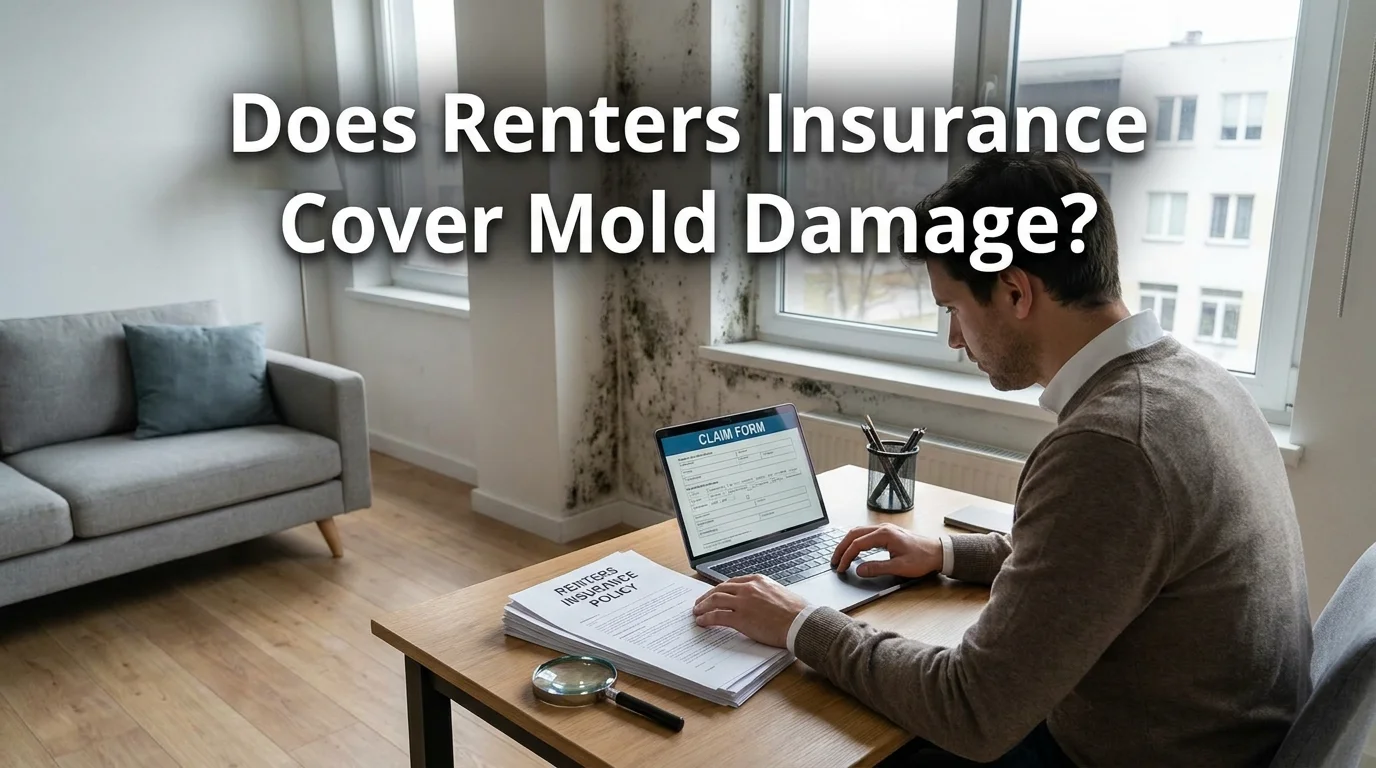
Finding mold in an apartment can raise two immediate questions: who is responsible for fixing it, and who pays for damaged belongings? Does Renters Insurance Cover Mold Damage? Renters insurance can sometimes help, but mold isn’t automatically covered just because you have a policy. In most cases, the deciding factor is what caused the moisture that allowed the mold to grow.
Quick answer: Does Renters Insurance Cover Mold Damage when the mold is a direct result of a sudden, accidental event your policy covers, such as a burst pipe? It usually does not cover mold caused by long-term leaks, humidity, neglect, or outside flooding, and coverage can be limited by mold exclusions or endorsements.
Does Renters Insurance Cover Mold Damage?
Renters insurance may cover mold damage when the mold results from a covered peril under your policy. A sudden burst pipe, for example, could damage a rug, furniture, clothing, or electronics and create conditions for mold growth before everything is fully dried. If the original water loss qualifies for coverage, resulting mold damage to covered personal property may also qualify, depending on your policy’s exclusions, limits, and endorsements.
The important distinction is that renters insurance primarily protects the renter rather than the building itself. The National Association of Insurance Commissioners explains that renters policies commonly provide personal property coverage, liability protection, and additional living expense coverage, while renters generally do not insure the structure they live in. Damage to walls, floors, ceilings, plumbing, and other parts of the building is therefore usually handled separately from damage to the renter’s possessions.
Mold Coverage at a Glance
| Mold scenario | Is renters insurance likely to cover it? | Why? |
|---|---|---|
| Mold after a sudden burst pipe | Possibly | The underlying water loss may be a covered event |
| Mold after an accidental appliance overflow | Possibly | Sudden and accidental water damage may qualify |
| Mold after water used to extinguish a covered fire | Possibly | The mold may result from an otherwise covered loss |
| Mold from a slow leak lasting weeks or months | Usually no | Gradual damage and maintenance issues are commonly excluded |
| Mold caused by high indoor humidity | Usually no | It generally develops gradually rather than from a covered event |
| Mold caused by poor ventilation | Usually no | Often treated as a maintenance or environmental problem |
| Mold after outside flooding | Usually no under standard renters insurance | Standard renters policies generally exclude floods |
| Mold involving walls, ceilings, or structural materials | Usually not under the renter’s property coverage | The building is normally the landlord’s property |
| Mold from renter neglect | Usually no | Failure to prevent or report ongoing damage can affect coverage |
When Does Renters Insurance Cover Mold?
The strongest mold claims generally involve a clear, sudden, and accidental event that your policy already covers. Texas Department of Insurance consumer guidance, for example, says most homeowner and renters policies cover sudden and accidental water events such as a burst pipe, toilet overflow, or broken washing-machine hose, while gradual leaks are generally excluded. The exact language of your policy controls, so a covered water event does not guarantee reimbursement for every mold-related expense.
A Burst Pipe Causes Mold
Suppose a pipe unexpectedly bursts behind your kitchen sink and soaks a rug, boxes, and nearby furniture. Mold appears on those possessions several days later despite reasonable efforts to dry the area, and the pipe failure itself is covered by your policy. In that situation, your personal property coverage may help repair or replace eligible belongings, subject to the deductible, coverage limits, valuation method, and any mold-specific restriction.
An Appliance Suddenly Leaks or Overflows
A sudden washing-machine hose failure, dishwasher leak, or similar accidental water discharge can also create a potentially covered claim. The key is that the event was unexpected rather than the result of a leak that had been developing for months without repair. If you notice unexplained dampness before a major failure occurs, Magazinexu’s guide to hidden water leaks and their warning signs can help you recognize conditions you should report quickly.
Firefighting Water Leads to Mold
Mold can sometimes develop after water is used to control a covered fire. Because the original fire and resulting water damage may be insured events, later damage related to that loss can potentially fall within the claim as well. However, the insurer will still examine the policy language, timing, mitigation efforts, and any mold or fungi limitation before agreeing to payment.
When Does Renters Insurance Not Cover Mold Damage?
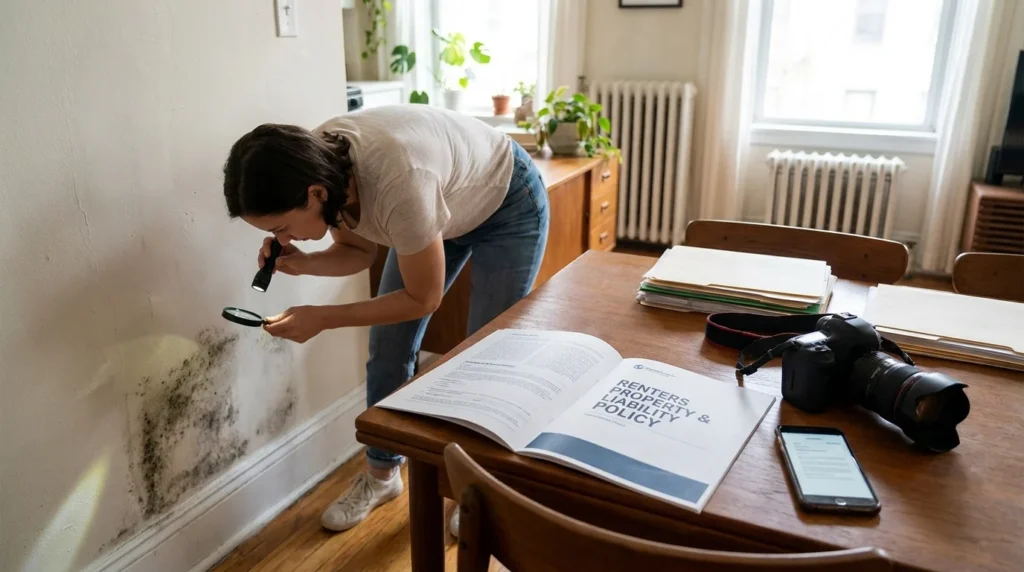
Mold that develops slowly is much less likely to be covered by a standard renters policy. Insurers commonly distinguish sudden accidents from deterioration, neglect, repeated seepage, maintenance problems, and conditions that a reasonable person could have addressed before substantial damage developed. Current insurer guidance likewise identifies long-term leaks, humidity, poor ventilation, and neglect as common situations in which mold claims are excluded.
Long-Term or Gradual Leaks
Imagine a small leak underneath a bathroom sink that continues for several months before anyone repairs it. If mold eventually damages boxes stored nearby, an insurer may view the loss as gradual water damage rather than a sudden covered event. Promptly reporting a leak to the landlord also creates a record showing you took reasonable action after discovering the problem.
High Humidity and Condensation
Mold caused primarily by persistent humidity, condensation, or poor airflow is usually considered a maintenance or environmental issue rather than an insured accident. The EPA recommends controlling moisture and ventilation and specifically advises renters to report plumbing leaks and moisture problems promptly to the building owner, manager, or superintendent. Those preventive measures matter because insurance is generally designed for unexpected losses rather than ongoing conditions.
Neglect or Failure to Act
Coverage can also become difficult if a tenant notices significant water intrusion but allows it to continue without telling the landlord or insurer. Even when the original problem might have qualified for coverage, policy conditions can require reasonable steps to prevent additional damage after a loss. Keeping written records of reports, repair requests, photographs, and responses can therefore matter if the cause of mold is later disputed.
Does Renters Insurance Cover Mold From Flooding?
Standard renters insurance generally does not cover damage caused by an external flood. The National Flood Insurance Program states that most homeowners and renters policies do not provide flood coverage, while renters can purchase separate contents-only flood insurance to protect eligible belongings from direct flood damage. NFIP contents coverage for renters can insure qualifying personal belongings up to the selected policy limit, subject to policy rules and exclusions.
That does not mean every mold problem following a flood is automatically covered by flood insurance. NFIP policies include restrictions on moisture, mildew, and mold, especially when additional damage could reasonably have been prevented after the flood. Renters in flood-prone areas should therefore review both their ordinary renters policy and any separate flood policy rather than assuming one policy fills every gap.
What Parts of Renters Insurance Could Pay for a Mold Claim?
Several sections of a renters policy may become relevant when mold follows an insured loss. Which section applies depends on what was damaged and whether the rental can still be occupied. Policy limits, deductibles, exclusions, endorsements, and state-specific requirements can change the final payment.
Personal Property Coverage
Personal property coverage is the section most likely to matter when mold damages clothing, furniture, rugs, electronics, or other possessions. The NAIC explains that this coverage can pay to repair or replace belongings damaged by an insured loss, but policies can calculate reimbursement using either actual cash value or replacement cost. Actual cash value generally accounts for depreciation, while replacement-cost coverage reimburses the cost of replacing an eligible item with a new equivalent, subject to policy terms.
Additional Living Expenses
A serious covered loss can sometimes make an apartment temporarily uninhabitable. When that happens, additional living expense coverage may reimburse qualifying extra costs above what you normally spend, such as increased temporary housing or meal expenses, subject to limits. Mold-related displacement generally must stem from an insured loss for this part of the renters policy to respond.
For a broader explanation of how insurance claims and temporary living expenses work after property damage, see Magazinexu’s guide to home insurance coverage and claims. Although homeowners and renters policies insure different property interests, understanding the basic claims process can make conversations with an adjuster easier. Still treat your renters policy as the controlling document for your own claim.
Personal Liability Coverage
Liability insurance under a renters policy can protect you when you are legally responsible for accidental injury to another person or damage to someone else’s property. Whether it could respond to a mold-related liability dispute depends heavily on the circumstances and the policy’s exclusions. Do not assume that liability coverage automatically pays for mold simply because another person or the landlord alleges that you caused the problem.
Is the Landlord Responsible for Mold Instead?
Renters insurance and landlord responsibility are separate issues. Your policy generally insures your belongings and certain personal risks, while the landlord owns the building and is normally responsible for maintaining it. Specific legal duties vary by state, local law, lease terms, and the cause of the moisture problem. A mold problem involving a leaking roof, faulty plumbing, damaged walls, or other structural components may therefore require action from the property owner even when your renter’s policy does not cover the resulting loss.
Responsibility can become more complicated when a landlord knew about a leak but failed to repair it after receiving notice. In that situation, the renter’s insurer may deny some expenses, while the landlord or another responsible party could face a separate claim, depending on state law and the facts. Because landlord-tenant rules vary across the United States, renters dealing with serious unresolved mold should consider their lease, local housing rules, and qualified legal or tenant-assistance resources rather than relying on a general national rule.
Does Renters Insurance Cover Black Mold?
Black mold is generally evaluated under the same coverage principles as other mold: the cause matters more than the color or common name. If the growth resulted from a covered sudden event, related property damage may qualify, while mold caused by prolonged moisture or maintenance problems typically does not. Insurers can also impose exclusions, sublimits, or endorsement requirements specifically addressing fungi, wet rot, dry rot, or bacteria.
A mold inspection itself may not be included in standard renters coverage even when some resulting property damage qualifies. EPA guidance also notes that visible mold does not always require sampling and that no federal numerical limits for mold or mold spores determine whether a building complies with a federal mold standard. If significant cleanup is needed, follow appropriate safety guidance instead of relying only on appearance or mold color.
How Much Will Renters Insurance Pay for Mold Damage?
There is no universal mold payout that applies to every renters policy. Payment can depend on your personal property limit, deductible, actual-cash-value or replacement-cost settlement method, the value of damaged items, and any mold-specific sublimit. Some policies may provide limited mold coverage only through an endorsement, so the mold limit can be significantly different from your overall personal property limit.
Read the declarations page, exclusions, endorsements, and definitions instead of looking only at your total personal property amount. The NAIC advises consumers to check the covered perils, exclusions, general conditions, coverage limits, and valuation method in their policy documents. If those sections are unclear, ask the insurer or licensed agent to identify the exact language governing fungi or mold before assuming a claim is covered.
How to File a Renters Insurance Claim for Mold Damage
The quality of your documentation can affect how clearly the insurer can determine what happened. Your goal should be to establish when the underlying event occurred, what caused the moisture, when you discovered the problem, what belongings were damaged, and what you did to prevent additional loss. Follow your insurer’s instructions and avoid making permanent repairs or throwing away major damaged items before documenting them unless immediate action is necessary for safety.
- Stop or limit additional water damage when it is safe to do so. Shut off an accessible water source when appropriate and notify building management immediately.
- Tell your landlord in writing. Email, a maintenance portal, or another written record can show when you first reported the problem.
- Photograph and record the damage. Take wide shots, close-ups, and photos showing both damaged belongings and the apparent water source.
- Create an inventory. List damaged possessions, approximate purchase dates, prices, receipts, photographs, model numbers, and replacement costs when available.
- Contact your insurer promptly. Explain the event that caused the mold instead of reporting only that mold exists.
- Review the mold language in your policy. Look for endorsements for fungi, wet rot, dry rot, bacteria, seepage, water damage, flood, and mold.
- Keep damaged property when reasonably possible. Ask the insurer whether an adjuster needs to inspect items before you dispose of them.
- Save temporary-living and emergency-expense receipts. They may be relevant if a covered loss makes the apartment uninhabitable.
- Keep every claim document. Save claim numbers, adjuster emails, estimates, photographs, repair reports, and written coverage decisions.
The NAIC recommends maintaining an inventory and proof of ownership because documentation can make property claims easier to prepare accurately. After a mold or water event, detailed records may also help distinguish a sudden covered accident from an older maintenance problem. The insurer will ultimately make its decision according to the policy language and evidence surrounding the loss.
Should You Clean Mold Before the Insurance Adjuster Arrives?
You should take reasonable steps to prevent additional damage, but protecting your health and documenting the loss come first. The EPA’s mold cleanup guidance and the CDC recommend protective equipment for mold cleanup after major water events, including gloves, eye protection, and at least an N95 respirator in relevant disaster-cleanup situations. Serious contamination, widespread water damage, or uncertain conditions may require professional assessment rather than extensive do-it-yourself cleanup.
Photograph the affected area before cleaning or discarding belongings whenever it is safe to do so. Contact the landlord and insurer promptly and ask whether an inspection is required before major remediation begins. Magazinexu also has a guide on choosing a reliable disaster restoration company if professional water or mold remediation becomes necessary.
Can You Add Extra Mold Coverage to Renters Insurance?
Some insurers offer mold or fungi endorsements that add coverage or increase a limited amount already provided by the base policy. Availability, coverage limits, covered causes, deductibles, and terminology vary significantly by company and state. An endorsement is particularly worth asking about if you live in an area where humidity, plumbing failures, storms, or older buildings make moisture problems more likely.
Ask the insurer what the endorsement actually changes rather than simply asking whether “mold insurance” is included. Find out whether the extra protection applies to damaged personal property, remediation expenses, testing, additional living expenses, or only certain losses caused by covered water events. Request the endorsement wording in writing so you can compare the protection with the standard policy’s mold exclusion.
What If Your Mold Claim Is Denied?
A denial does not always mean you have reached the end of the process. Ask the insurer for the decision in writing and identify the specific policy exclusion, definition, condition, or factual finding used to deny the claim. Compare that explanation with your photographs, maintenance records, landlord correspondence, plumbing reports, and evidence showing when the underlying water event occurred.
If you believe the insurer has misapplied the policy, start by asking for an internal review or clarification from the claims department. U.S. insurance regulation is largely state-based, and the NAIC explains that dissatisfied consumers can contact their state department of insurance and, when appropriate, file a complaint. That process does not guarantee that a denied claim will be reversed, but it gives consumers an official channel for unresolved insurer disputes.
How Renters Can Reduce the Risk of Mold Damage
Preventing moisture problems can protect both your belongings and your ability to document that you acted responsibly. Report leaks, roof problems, damp drywall, plumbing failures, and persistent condensation as soon as you notice them, and keep copies of every request. The EPA also recommends controlling indoor humidity, improving ventilation when appropriate, using exhaust fans during moisture-producing activities, and promptly addressing plumbing leaks.
A home inventory is another useful precaution because mold can damage many ordinary possessions at once. Photograph furniture, electronics, clothing, rugs, books, and other valuables, and save receipts or digital purchase records where possible. Review your policy annually so you understand the deductible, personal property limit, replacement-cost provisions, water exclusions, and any mold endorsement before a loss occurs.
Frequently Asked Questions
Does renters insurance cover mold remediation?
Renters insurance may contribute to mold-related cleanup when the mold results from an insured event, but policies vary widely. Some standard policies restrict or exclude remediation expenses even when certain damaged belongings qualify for reimbursement. Check for a fungi or mold endorsement and ask the insurer whether cleanup, testing, and damaged personal property have separate limits.
Does renters insurance cover mold in walls?
Renters insurance generally does not insure the apartment’s walls, ceiling, flooring, or other structural components because the renter does not own the building. Structural repairs and building remediation are normally the property owner’s responsibility, although insurance and legal duties depend on the cause and circumstances. Your renters policy may still address your personal belongings or additional living expenses if the underlying loss qualifies.
Does renters insurance cover mold from a leaking roof?
It depends on why the roof leaked, whether the resulting water event is covered, and whether the mold itself is excluded or limited. A sudden event that damages a roof and allows water inside may be treated differently from an old roof that has leaked gradually for months. Because the roof is part of the building, the landlord should also be notified immediately about the structural problem.
Does renters insurance cover mold from an air conditioner?
Coverage depends on whether the moisture resulted from a sudden accidental failure or a long-term maintenance problem. A sudden covered appliance or system-related water event may create a stronger claim than months of condensation, clogged drainage, or unresolved leakage. Your insurer will look at both the source of the water and the policy’s mold, maintenance, and water-damage provisions.
How quickly should you report mold to renters insurance?
Report a potentially covered loss as soon as reasonably possible according to the notice requirements in your policy. Waiting can make it harder to establish the original cause and can allow additional damage to develop. Notify the landlord promptly as well, especially when a plumbing, roof, HVAC, or structural problem is still introducing moisture.
The Bottom Line
So, does renters insurance cover mold damage? It can, but generally only when the mold is connected to a covered sudden and accidental loss and the policy does not exclude or excessively limit the resulting mold damage. Mold from gradual leaks, high humidity, neglect, poor maintenance, and external flooding is much more likely to fall outside a standard renters policy.
The smartest first step is to identify the source of the moisture and read the policy before assuming either the renter or landlord must pay. Document the problem immediately, report it to the landlord and insurer, protect your belongings from further damage when safe, and keep every receipt and communication related to the loss. Because policy forms and landlord-tenant rules vary across the United States, obtain advice from your insurer, state insurance department, or a qualified professional when your situation involves disputed coverage or legal responsibility.